
Team SWOT Analysis: How to Create One for Your Team
A team SWOT analysis is one of the most practical strategic tools your group can run. Since the framework was developed in the mid-1960s, leading organizations have used it to guide big decisions. But you don't have to be a major brand to benefit. A SWOT analysis for a team helps every member recognize their strengths, weaknesses, opportunities, and threats. Based on that shared view, your team can better plan and strategize for real success and growth.
What is a team SWOT analysis?
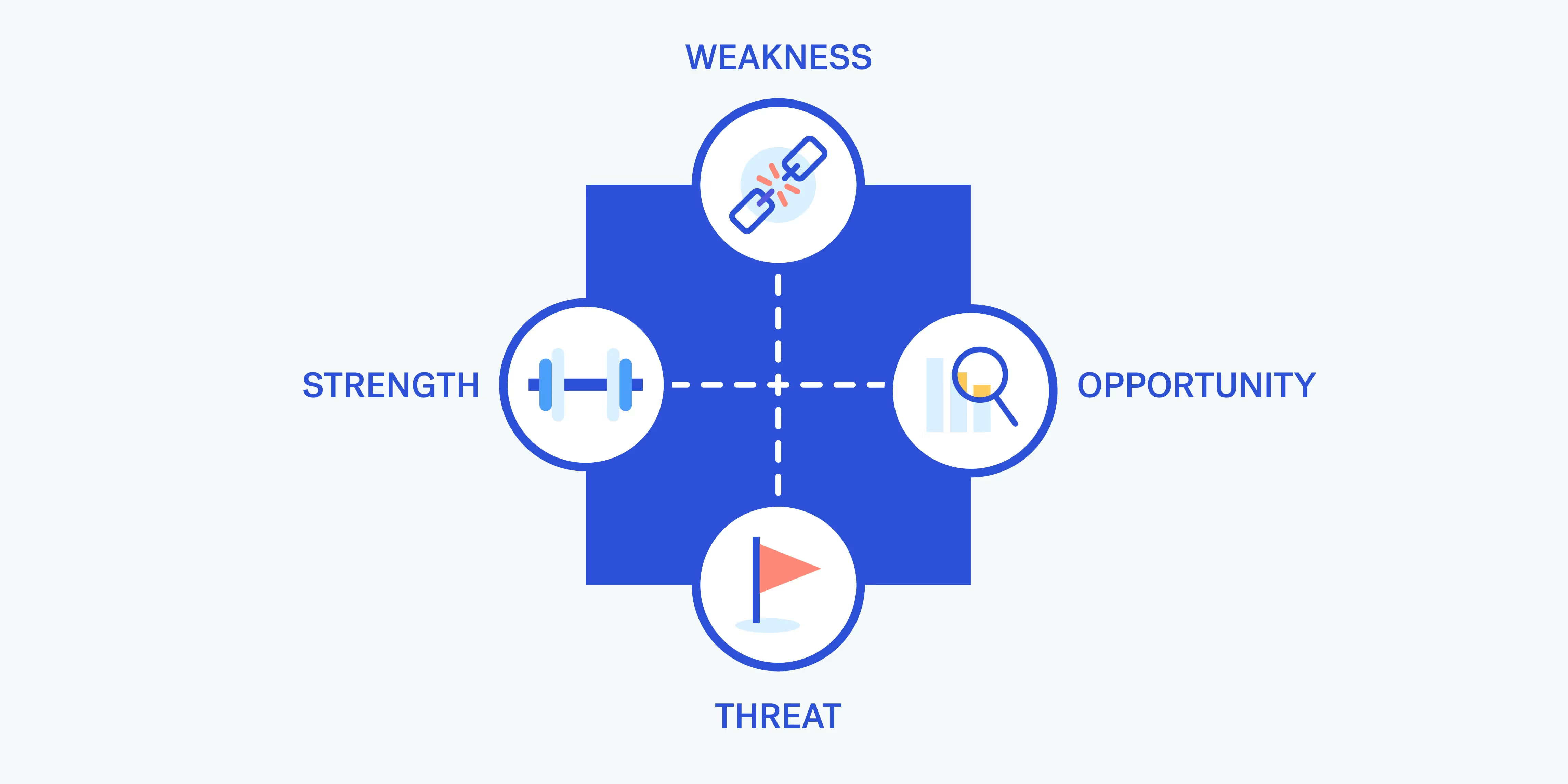
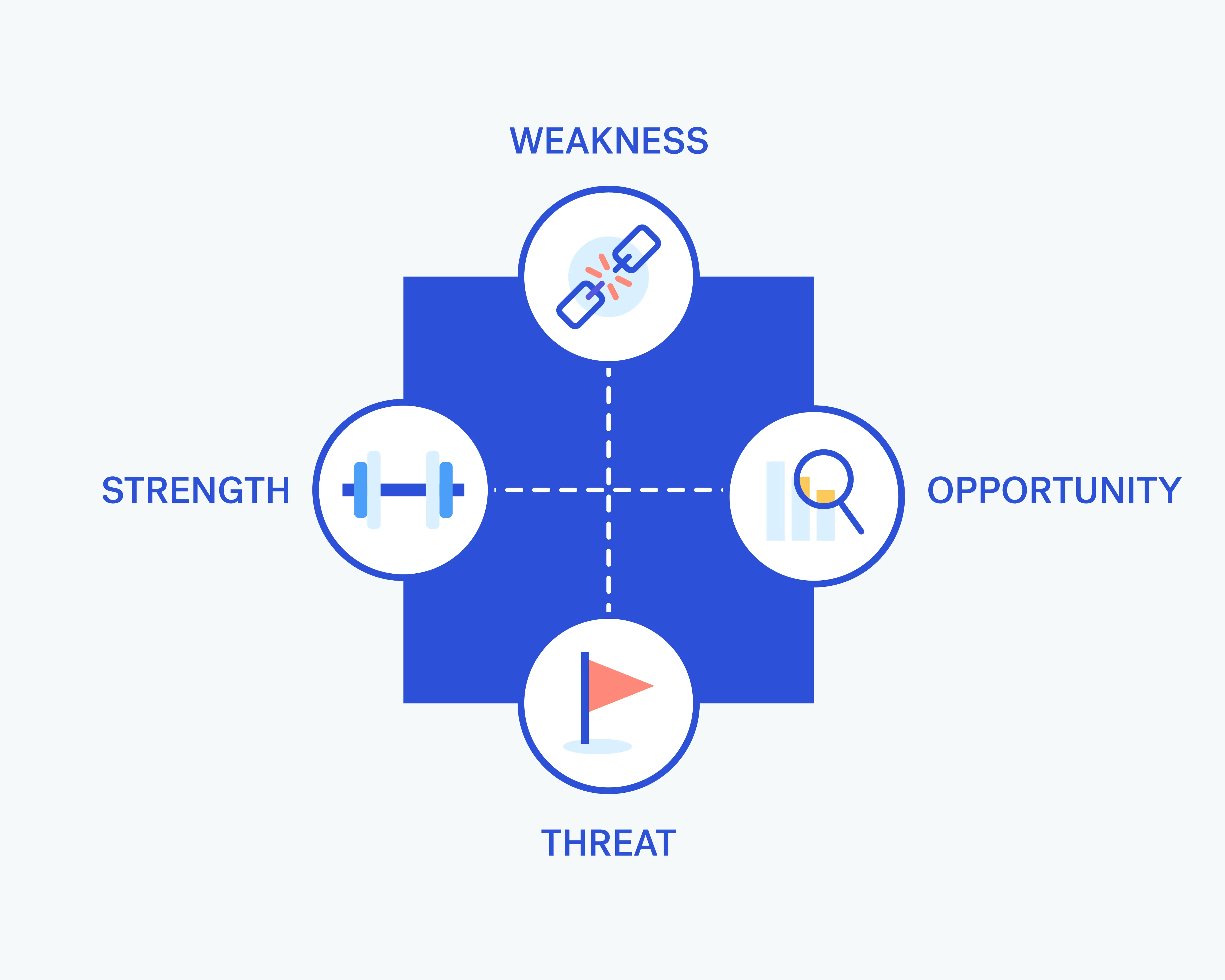
Let's start by defining what goes into a team SWOT analysis. SWOT stands for:
S = Strengths – What internal qualities give your team a competitive advantage?
W = Weaknesses – What internal weaknesses leave your team vulnerable to threats, loss or failure?
O = Opportunities – What external conditions can result in growth for your team?
T = Threats – What external conditions could threaten your team’s success and growth?
A team SWOT analysis is a planning technique used to identify these important strengths, weaknesses, opportunities, and threats. By running a team swot, your group can better understand its efficiencies, uncover areas for improvement, and build strategies that take advantage of strengths while addressing weaknesses.
Why run a SWOT analysis for a team?
Running a swot analysis for team building gives everyone a clearer picture of what's working and what isn't. Here's why it's worth your time:
- It builds self-awareness. Every team member gets a clear picture of what the group does well and where it falls short, individually and collectively.
- It drives collaboration. The process requires real input from the whole group, making it a natural team-bonding exercise.
- It surfaces skill gaps. A team SWOT makes it easy to spot where training, hiring, or process changes are needed.
- It boosts morale. Naming your strengths formally reminds the team what they do well and keeps momentum going.
- It feeds strategic planning. Once you see your SWOT clearly, you can build plans that capitalize on strengths and guard against threats.
Plotting the analysis in writing also creates a valuable data visualization tool that helps teams envision business plans, objectives, and strategies.
Steps to conducting a team SWOT analysis
Ready to run a team SWOT analysis? You can reference a variety of templates and team SWOT analysis examples to get started. No matter which format you choose, you'll want to cover these steps:
1. Collaborate on SWOT analysis
SWOT analysis is not a solo activity. For teams to benefit from SWOT analysis, it’s vital they collaborate throughout the process. Obtain feedback from team members on their ideas of strengths, weaknesses, opportunities and threats, and be sure to use some of the most creative suggestions. Present the SWOT analysis and results to the entire team so that every member can benefit from the greater understanding.
2. List internal strengths
Look at the internal workings of your team. What are your strengths? What makes your team competitive? What do you do best as individuals and as a unit? What are you doing right? List any attributes that positively contribute to your team’s performance.
3. List your team’s weaknesses
Be completely honest here… what are your weaknesses? What attributes of the team hinder your progress and growth? What about the weaknesses of individual team members? What can you improve? List any internal weaknesses that compromise performance.
4. Determine your opportunities
Now it’s time to take a look at external factors impacting your team. In what situations can you put your strengths to use? After brainstorming for known opportunities, look at your list of strengths and consider ways you can put them into action for the betterment of your team’s performance. Collaboration is key, as every team member might have their own ideas for opportunities to improve and excel.
5. List external threats to the team
What threats is your team facing? External forces that can’t be completely controlled, like a budget cut or competitor launch, should be listed as threats in the SWOT analysis. Other examples of threats might be a lack of training, increased regulation or other external market factors.
6. Design strategies for improvement
Once you’ve completed your SWOT analysis, it’s time to strategize. What can the team do to take advantage of its strengths and opportunities while overcoming its weaknesses and threats? Remember to attack opportunities by building upon your strengths, find ways to strengthen your weaknesses and develop strategies to overcome or eliminate threats. Look at ways to maximize the strengths of the team as a whole as well as every individual team member.
7. Monitor your progress
It’s not enough to do a SWOT analysis, develop strategies and move along. It’s important to monitor any strategic implementation to measure progress. Following the SWOT analysis, plan regular team meetings to evaluate that progress and make necessary changes when necessary.
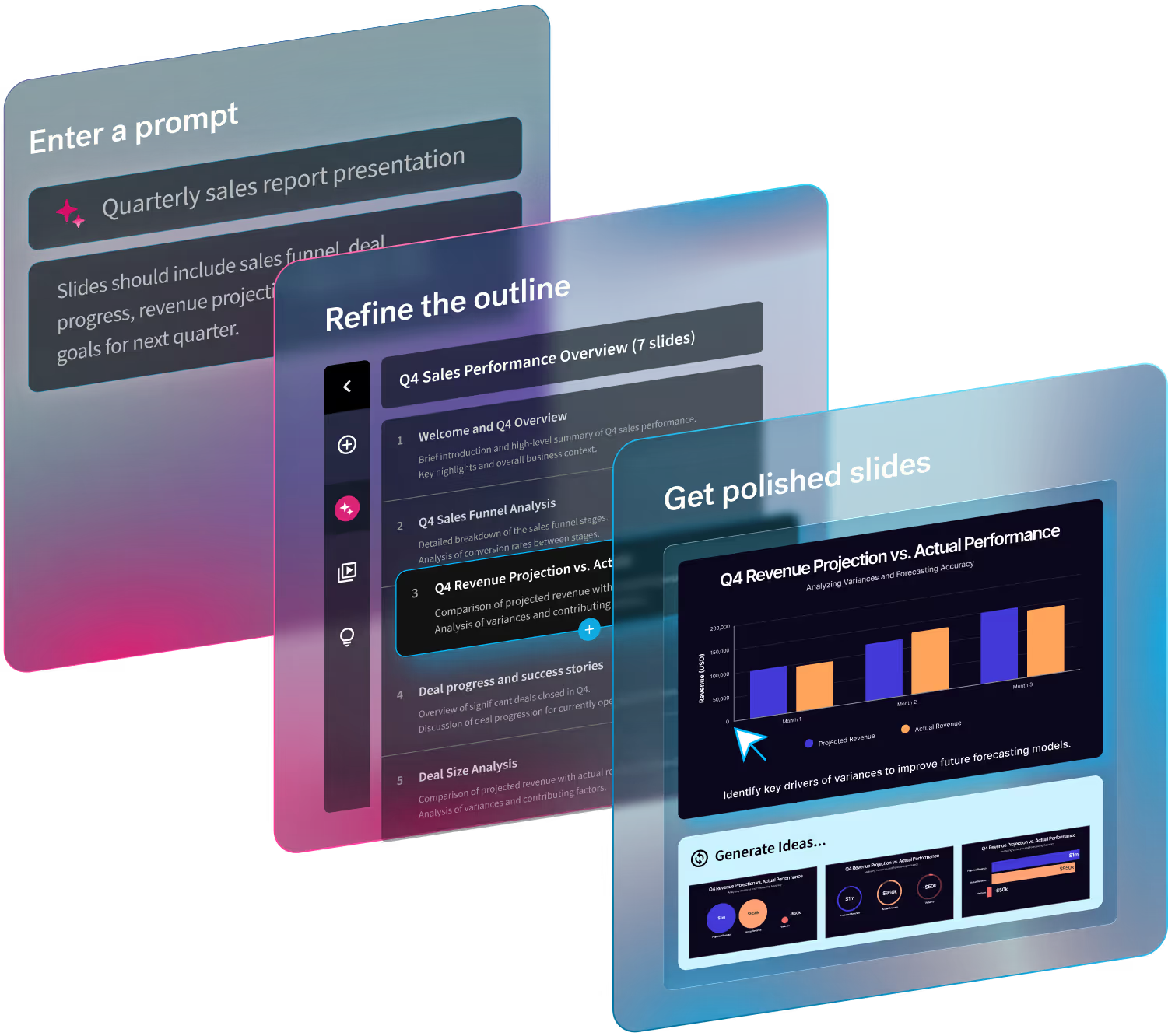
Beautiful.ai’s SWOT analysis template makes it a breeze for teams to present their strategic planning. Just add your content and watch as artificial intelligence designs the SWOT matrix based on professional principles of good design. In fact, Beautiful.ai’s Teams Plan offers everything teams need to design decks quickly, collaboratively and on brand.
Team SWOT analysis examples
The best way to understand what a team SWOT looks like in practice is to see it applied. Here are three team SWOT analysis examples across different functions.
Example 1: Marketing team
Strengths: Strong creative output across campaigns, deep analytics knowledge, high audience engagement metrics.
Weaknesses: No experience in print or event marketing, over-reliance on a few key contributors, inconsistent brand voice across channels.
Opportunities: Growing short-form video demand, influencer partnership potential, AI content tools to scale production.
Threats: Rising ad costs, algorithm changes, competitors with larger media budgets.
Example 2: Sales team
Strengths: High close rate on inbound leads, strong product knowledge, consistent follow-up cadence.
Weaknesses: Long average deal cycles, limited outbound prospecting skills, gaps in CRM adoption.
Opportunities: Expansion into a new market segment, new integrations increasing product stickiness, upsell potential in existing accounts.
Threats: Increased competitor discounting, complex buying committees, economic uncertainty slowing decisions.
Example 3: Product team
Strengths: Rapid iteration cycles, tight cross-functional collaboration, deep user empathy from regular customer research.
Weaknesses: Technical debt slowing new feature development, limited QA capacity, roadmap not always aligned with sales priorities.
Opportunities: AI features to differentiate the product, partnerships with adjacent tools, growing demand for integrations.
Threats: Competitor feature parity, engineering resource constraints, shifting compliance requirements.



.avif)