.avif)
.avif)

AI dominates headlines, but most of the real progress isn't happening in research labs or flashy product demos. It's happening in ordinary workdays.
The average knowledge worker isn't building autonomous agents or replacing entire business processes. They're using AI to prepare for meetings, summarize documents, refine presentations, and draft emails.
Those small moments rarely make the news. But they're the ones reshaping how work gets done.
The clearest picture of AI's future is found in the practical habits millions of people are already building. As AI becomes another layer inside the tools we use every day, repeated workflows are creating lasting productivity gains that compound over time.
Understanding those patterns makes it easier to separate meaningful change from marketing hype and prepare for where work is actually headed.
AI improves jobs, doesn’t replaces them
Much of the conversation around AI still revolves around job replacement. In practice, most organizations are adopting AI for a much more practical reason: helping employees work faster and produce better results.
Beautiful.ai's 2026 AI in the Workplace Survey found that only 9% of managers said their primary reason for adopting AI was reducing headcount. Most were focused on improving efficiency and helping employees become more productive.
That lines up with how AI is showing up across the workplace today.
Instead of replacing expertise, AI is taking over repetitive cognitive tasks that interrupt focus throughout the day. Workers are using it to:
- Draft emails and documents
- Summarize long reports and meeting notes
- Brainstorm ideas and pressure-test thinking
- Rewrite content for different audiences and tones
Nonetheless, the strongest outputs still depend on human judgment. AI can generate possibilities, identify patterns, and accelerate first drafts, but people remain responsible for deciding what's accurate, useful, and appropriate. That partnership between human expertise and AI assistance is becoming the default model for knowledge work.
Small improvements compound
The value of AI doesn't come from saving an hour once a month. It comes from saving five or ten minutes over and over again.
Consider a typical workday with AI. Prior to a meeting, AI can summarize previous call notes and prepare discussion points. Afterward, it can organize notes and identify action items.
When writing a proposal, AI can review the draft for clarity, suggest stronger wording, and highlight inconsistencies. For context switching between audiences, it can help tailor the same message for executives, customers, or teammates.
Content creation offers another example. Marketing teams use AI to improve SEO, edit drafts, generate images, and build presentations. None of those steps eliminates human creativity, but each removes friction from the process.
Each task is relatively small. Together, they reduce context switching, shorten routine work, and give people more time for strategic thinking.
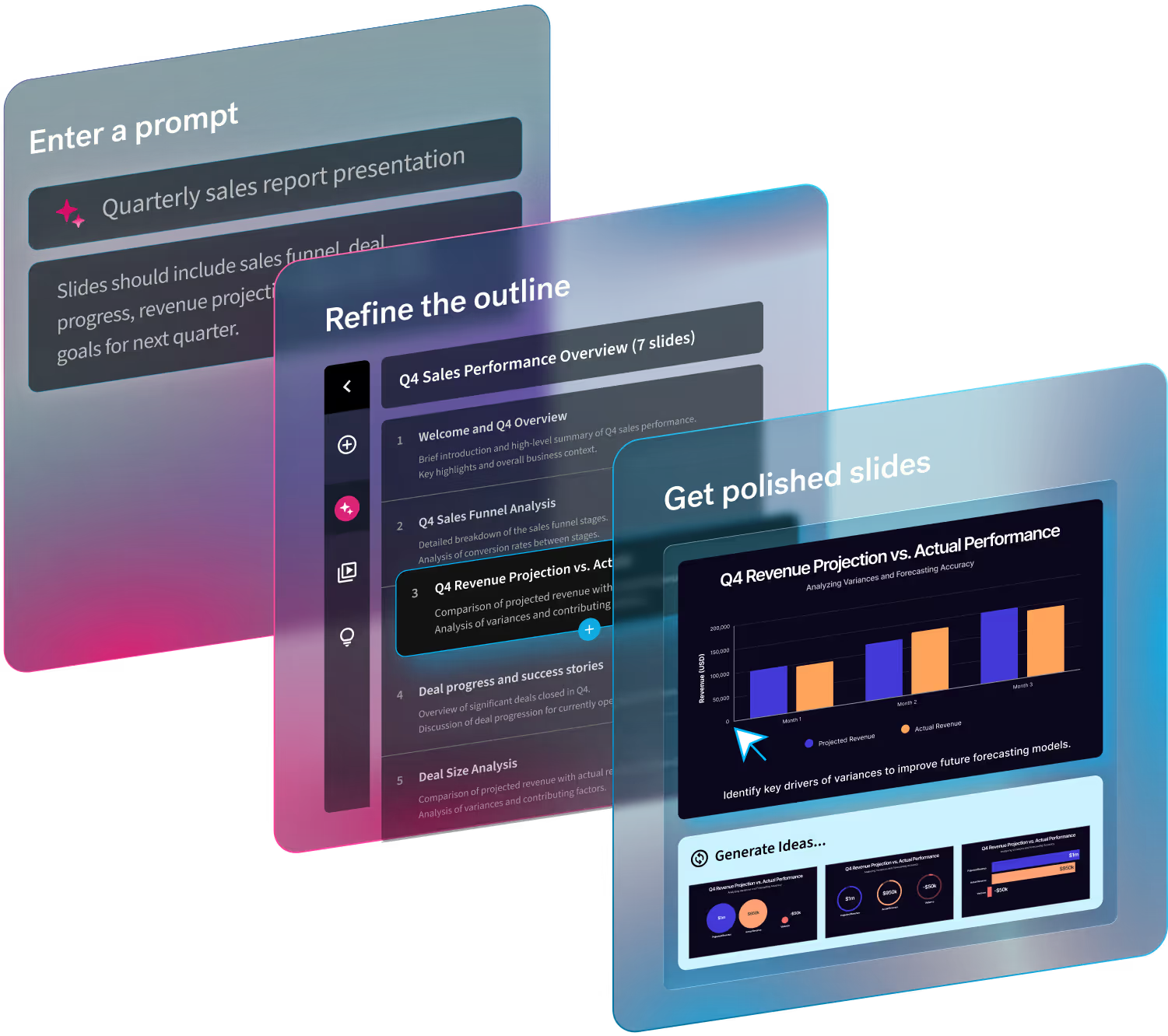
That's where presentation tools are evolving as well. Rather than forcing people to move between multiple AI tools, Beautiful.ai's Create with AI Workflow lets teams start with a prompt, outline, and/or existing document, then refine presentations inside the same workspace as ideas evolve. AI becomes part of the presentation workflow instead of another application to manage.
AI is becoming the new standard
One of the biggest changes over the past year is that AI no longer feels like a separate activity. Most people aren't opening a chatbot every time they need help. They're using products that quietly incorporate AI into existing workflows.
Meeting platforms generate notes automatically. Email clients suggest responses. Writing software offers revisions while you type. Presentation software helps organize ideas before the first slide is built. As AI becomes embedded inside familiar tools, using it stops feeling like "using AI." It simply becomes part of how work happens.
Over time, those habits become the new standard. Work doesn't look dramatically different from the outside, but behind the scenes, AI is quietly removing friction from nearly every stage of knowledge work.
Fluency creates an advantage
Today, the gap between high performers and everyone else isn't access to AI. Nearly everyone has access to capable AI tools. The most effective AI users aren't chasing trends, but identifying repeatable workflows that consistently save time without compromising quality.
These knowledge workers can write prompts that produce useful results, recognize when AI can accelerate a task and when human expertise should take over, and revisit the same workflows often enough that using AI becomes second nature.
For organizations, the lesson isn't to standardize every prompt employees write. It's to help teams identify the repetitive work where AI delivers the most value, then share those workflows across the business.
Instead of asking, "Which AI tool should we buy?" leaders should question, "Which recurring tasks slow our teams down?” That shift changes the conversation from technology to outcomes.
For many teams, presentation creation is one of those opportunities. AI can help generate polished presentations in far less time, allowing employees to spend more energy refining their message instead of formatting slides. Beautiful.ai's is designed around that reality by supporting the full presentation process within a single workflow.
Not the first time tech changed the workforce
The future of work probably won't arrive through one breakthrough application that changes every job overnight.
We've seen this pattern before. Email replaced many paper memos without changing the purpose of communication. Cloud software changed where work happened without changing why teams collaborated. AI is following a similar path. It isn't creating an entirely new category of work. It's making existing work faster, more informed, and easier to execute.
As AI handles more drafting, summarizing, formatting, and analysis, human contribution shifts toward judgment, communication, creativity, and decision-making. Those skills become more valuable because they're harder to automate and more important for producing work that people trust.
For leaders, that means focusing less on encouraging AI adoption for its own sake and more on helping teams develop effective habits. Organizations that treat AI as an everyday productivity tool, rather than an isolated experiment, will be better positioned to adapt as the technology continues to evolve.
Delegate busy work and regain focus with AI
If you're waiting for a moment when AI suddenly transforms work, you may miss the transformation that's already happening.
Every summarized report, improved email, meeting prep completed in half the time, and presentation built from an outline instead of a blank slide represents another small shift in how knowledge work gets done.
Individually, those moments seem insignificant. Collectively, they're redefining expectations for productivity across every industry. If you're looking for one place to start, look at the tasks you repeat most often. Those are usually the first opportunities where AI delivers lasting value.
If presentations are one of those recurring tasks, Beautiful.ai helps bring AI into the workflow where ideas become polished, professional presentations. Instead of spending hours formatting slides, teams can focus on refining their thinking, telling a clearer story, and communicating with confidence.
Try it now, free for 14 days.

.avif)

.avif)