.gif)
.gif)

Every sales team wants to personalize its outreach, but few have the time to do it consistently.
Today's buyers expect more than a polished product overview. They want to know that you've taken the time to understand their business, priorities, and challenges they're trying to solve.
That expectation creates a familiar problem. Sales teams need to move quickly, but meaningful personalization traditionally requires hours of research, writing, and deck customization. As pipelines grow, many teams end up choosing between sending something generic or delaying follow-up while they build a presentation from scratch.
Artificial intelligence is changing that equation.
Rather than treating personalization as a manual task that starts over with every opportunity, sales teams can build a repeatable system that combines AI with reusable content and proven workflows. The result is faster turnaround, more relevant conversations, and greater consistency across the entire team.
Personalization is mandatory
Personalization has become a baseline expectation in modern sales. Buyers are evaluating more vendors than ever, and they can quickly tell the difference between a presentation built for their business and one that’s made the rounds.
Early conversations set the tone for the rest of the sales cycle. A prospect wants evidence that you've done your homework before they invest more of their time. But that level of preparation takes work.
Sales reps juggle multiple opportunities across different industries and company sizes. Building a unique presentation for every prospect simply isn't realistic when every hour spent formatting slides is an hour that isn't spent selling. AI can remove much of that manual work.
Instead of searching through call notes, CRM records, and company websites one by one, AI quickly surfaces the information that matters most. It can summarize discovery calls, identify recurring pain points, organize research, and suggest messaging that reflects what you've already learned about the prospect. Rather than replacing the salesperson's judgment, it gives them a stronger starting point.
Buyers want to know you're invested
A personalized presentation communicates something beyond product knowledge. It tells a buyer that you've invested time in understanding their business before asking for theirs.
In crowded markets, that effort matters. Decision makers have countless options, and many solutions offer similar features on paper. What often separates one vendor from another is how clearly they connect those features to a customer's goals.
That starts with understanding the prospect's business.
What initiatives are they focused on this quarter? What operational challenges keep appearing during discovery calls? Where are they trying to improve efficiency, reduce costs, or accelerate growth? The more clearly you understand those priorities, the easier it becomes to explain how your product fits into their broader objectives.
Generic presentations struggle because they leave buyers to make those connections themselves. Personalized presentations remove that burden. They demonstrate a clear understanding of the customer's environment and explain how your solution addresses the problems that matter most. That relevance helps establish credibility early and creates stronger engagement throughout the conversation.
Focus personalization where it creates the most value
Effective personalization doesn't require rebuilding every slide. The highest-performing sales teams focus their effort on the parts of the presentation that directly influence buying decisions while keeping foundational content consistent across the organization.
Prospect-specific pain points deserve the most attention. Discovery conversations often reveal operational challenges, strategic priorities, or business objectives that should shape the story you're telling. AI can quickly organize call notes and identify recurring themes that deserve emphasis in your presentation.
The same principle applies to use cases and expected outcomes. Rather than describing every feature your platform offers, focus on the scenarios that align with the buyer's goals. Help them visualize how your solution fits into their existing workflow and what success could look like after implementation.
Beautiful.ai's Team Slides and shared templates makes scalable personalization easier by giving sales organizations reusable content that can be centrally managed while allowing reps to customize the sections that matter most for each conversation.
That balance keeps presentations relevant without sacrificing consistency or creating unnecessary work.
Consolidate key data for better analysis
Preparing for a prospect meeting often means pulling information from multiple sources. Even experienced reps can spend an hour or more assembling that context. AI dramatically shortens that process.
Instead of jumping between platforms, reps can ask AI to summarize discovery notes, identify recurring pain points, surface executive priorities, and highlight recent company developments.
AI can also help tailor messaging for different audiences. A VP of Sales and a RevOps leader may both attend the same meeting, but they'll likely care about different outcomes. AI can suggest ways to adjust positioning based on the audience while keeping the overall narrative consistent.
The technology speeds up the tedious work while leaving relationship building, strategic thinking, and negotiation where they belong: with the salesperson.
Build a repeatable system for personalization
Scaling personalization entails creating a system that every salesperson can follow. The foundation of this is a modular sales deck approach.
Rather than treating every presentation as a brand new project, build reusable sections that can be assembled based on the opportunity. Your company story, product overview, customer testimonies, and pricing information should all exist as flexible building blocks that can be combined in different ways.
A centralized library improves consistency across the team. When everyone is working from the same approved messaging, visuals, and product information, buyers receive a more consistent experience regardless of which salesperson they're speaking with.
Beautiful.ai supports this approach through shared templates, Team Slides, and Brand Kits. Marketing and sales enablement teams can maintain approved content centrally while giving sales reps the flexibility to customize the sections that matter for individual buyers. Updates made to shared assets automatically flow into presentations, helping teams stay current without manually updating every deck.
The result is a workflow that supports both personalization and scale instead of forcing a compromise between the two.
An example workflow to get you started
Once a repeatable system is in place, creating a personalized deck becomes much more predictable. A practical workflow often looks something like this:
- Gather the basic information about the prospect. Understand their business, industry, customers, and current priorities.
- Use AI to analyze your data and provide company insights. Ask it to identify recurring pain points, summarize key initiatives, and highlight areas where your solution is most relevant.
- Develop a narrative that connects your solution directly to the buyer's goals. Instead of explaining every capability, focus on the problems they need to solve and the outcomes they're trying to achieve.
- Map that narrative to your modular deck framework. Rather than creating slides from scratch, you're selecting and customizing proven content that already exists.
- Generate a first draft. Easy. Effective. Scalable.
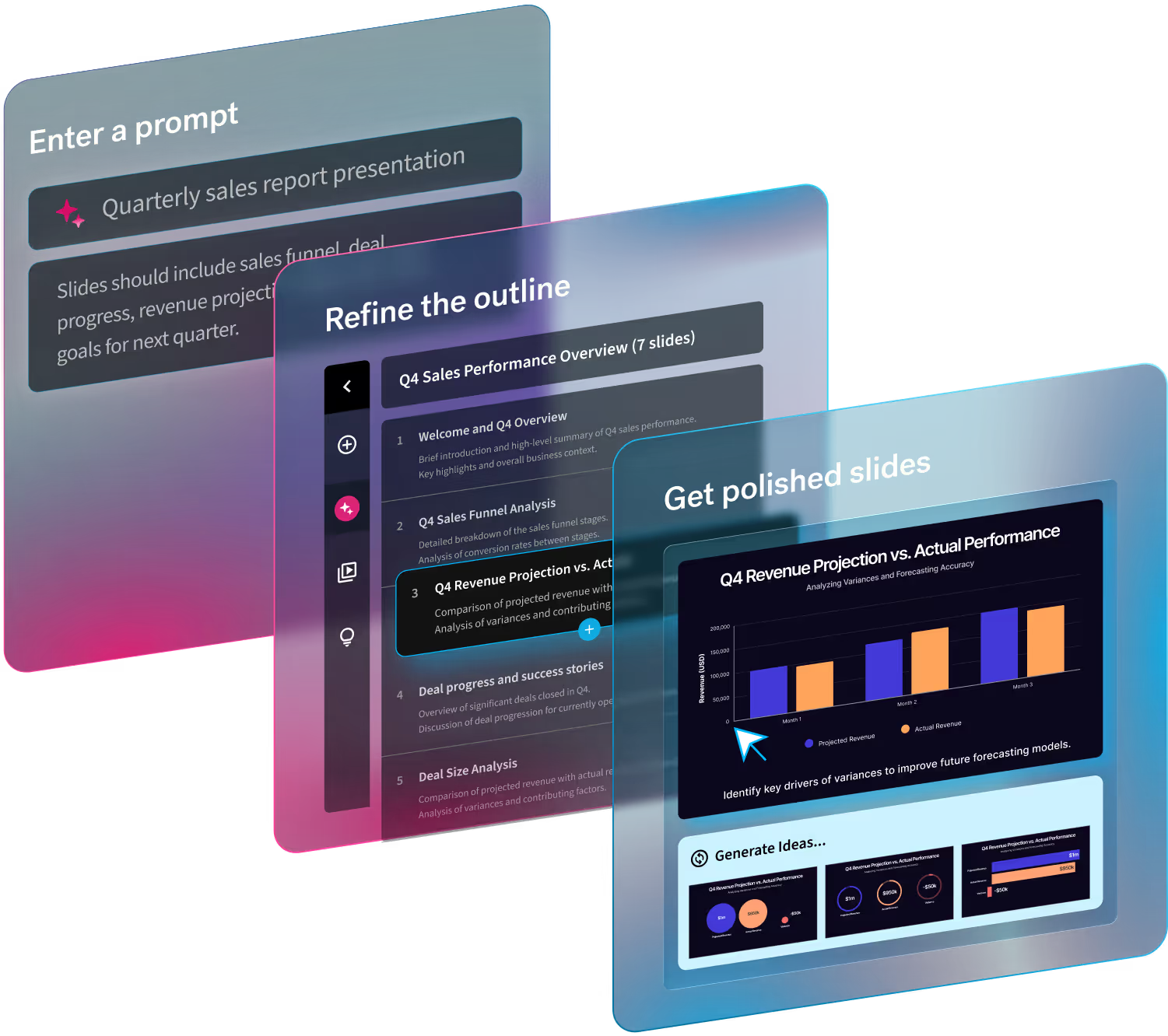
In Beautiful.ai, teams can start with detailed prompts, outlines, call notes, or supporting documents, then use AI to generate a structured presentation while maintaining design consistency through Smart Slides. Instead of spending time formatting layouts, reps can concentrate on improving the story and preparing for the meeting.
But that first draft isn't the final product. It's the point where AI hands the presentation back to the salesperson for refinement. Because nothing replaces human judgement.
Faster follow-up wins more opportunities
Timing matters in sales. The momentum built during a discovery call can disappear quickly if it takes several days to deliver a tailored presentation. Buyers continue evaluating alternatives, internal priorities shift, and enthusiasm fades. Shorten that gap with AI.
When research, messaging, and presentation creation happen more efficiently, sales reps can follow up while conversations are still fresh. Buyers receive relevant material sooner, which helps maintain engagement throughout the buying process.
Shared templates and centralized content libraries also reduce variability across the team. Every presentation reflects the same core messaging while allowing room for thoughtful customization. That consistency becomes especially important when multiple stakeholders interact with different members of the sales organization.
Beautiful.ai strengthens this process by handling much of the design work automatically. Team templates, Brand Kits, and Smart Slides help every presentation stay aligned with company branding, while AI accelerates drafting and iteration. Instead of spending hours adjusting layouts, sales teams can deliver polished, professional decks much sooner after each conversation.
As turnaround time decreases, reps can support more opportunities without sacrificing quality.
AI can't replace human judgment
AI can accelerate personalization, but it can't replace the experience and judgment that successful salespeople bring to every conversation.
Don’t waste time over-personalizing details that don't influence the buying decision. Buyers care about their business priorities, not whether you've included every minor detail you uncovered online. Relevance should always outweigh novelty.
It's equally important to review every AI-generated output before sharing it. AI summaries can miss nuance, draw incomplete conclusions, or introduce inaccuracies. Every recommendation and claim should be validated by the salesperson before it reaches the prospect.
Strong inputs matter, too. AI can only work with the information it's given. High-quality discovery calls, complete CRM notes, and thoughtful research all improve the quality of the final presentation. Treat your AI tools as assistants, not autopilots.
Track what works and keep improving
Personalization becomes even more valuable when you can measure its impact. Start by looking at engagement. Which presentations are prospects spending time with? Which sections consistently receive the most attention?
Those patterns reveal which messages are resonating and where opportunities exist to improve. Beautiful.ai Analytics provides visibility into viewer engagement, including which slides prospects spend time reviewing after a presentation has been shared.
It's worth tracking internal efficiency too. Measure how long it takes to produce a personalized presentation today, then compare those numbers after introducing AI into your workflow. Time savings often become one of the clearest indicators of success.
Connect your personalization efforts to business outcomes. Monitor conversion rates, follow-up speed, meeting progression, and win rates to understand whether more relevant presentations are improving sales performance.
Like every sales process, personalization should evolve over time. The teams seeing the strongest results regularly review performance, refine their workflows, and improve reusable content libraries.
Personalization is a system, not a bottleneck
Buyers no longer expect generic presentations. And thankfully, sales teams no longer have to choose between personalization and efficiency.
AI makes it possible to deliver relevant, tailored presentations at a scale that would have been difficult just a few years ago. But technology alone isn't enough. The strongest results come from combining AI with structured workflows, reusable content, and thoughtful human review.
Teams that build those systems spend less time recreating presentations and more time having meaningful conversations with prospects. They respond faster, maintain more consistent messaging, and create buyer experiences that feel informed rather than automated.
If your team is looking for a faster way to create personalized, professionally designed sales decks, Beautiful.ai helps combine AI-powered drafting with shared templates, Smart Slides, and centralized content libraries so every presentation is easier to personalize without starting from scratch.

.avif)